
See Your Story In The Cards
With Help From The Modern Mystic
Find answers, guidance, intuition, and self-reflection via email, post, or virtual for readings from our renowned Tarot Readers
The Modern Mystic - Tarot
What is tarot
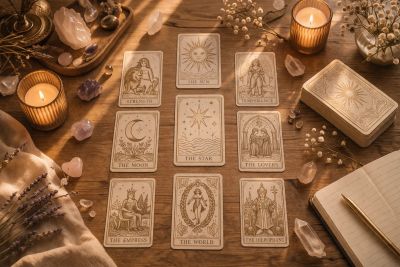
Tarot is a deck-based system that people use today for guidance, reflection, storytelling, spiritual practice, and sometimes fortune-telling.
Where did tarot start
Historically, though, tarot did not begin as a mystical tool. It began as a card game in Italy in the 15th century, when extra illustrated trump cards and the Fool were added to an existing four-suited pack. Early references cluster around cities such as Venice, Milan, Florence, and Urbino. A traditional tarot deck developed into what we now recognize as 78 cards: 56 suit cards plus 21 trumps and the Fool. The Italian suits were Cups, Swords, Batons, and Coins. In its earliest form, tarot was a trick-taking game, and the modern link with the occult and fortune-telling became widespread much later, mainly in the 19th century.
How has tarot evolved
Over time, tarot evolved from a game into a symbolic system people use for divination, self-inquiry, and intuitive guidance. In modern practice, many readers use tarot less as a rigid prediction tool and more as a way to explore patterns, choices, emotions, and possibilities.
Major and Minor Arcana Explained
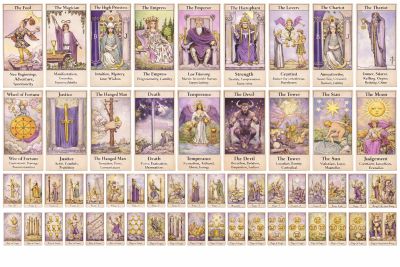
The tarot deck is divided into the Major Arcana and the Minor Arcana. The Major Arcana cards represent deeper life themes, soul lessons and major turning points, while the Minor Arcana reflects everyday experiences, emotions, challenges and actions. Together, they create a fuller story, blending the big spiritual journey with daily life.

Types of tarot card readings
There are many types of tarot readings, each designed to support different areas of life. Readings can focus on love, relationships, career, personal growth, spiritual guidance, decision-making or general insight. Some are short and focused, while others are more in-depth and explore the bigger picture. They are usually based on the topic, spread, or purpose of the reading.
By topic
General reading A broad reading about your current energy, life situation, or what is unfolding around you.
Love and relationship reading Focuses on romance, emotional connection, compatibility, challenges, and future direction in relationships.
Career and finance reading Looks at work, business, opportunities, decisions, money blocks, and professional growth.
Spiritual guidance reading Explores inner growth, intuition, healing, life lessons, and soul path.
Decision-making reading Helps compare options and understand possible outcomes before making a choice.
By purpose
Predictive reading Looks at what may happen next or what energy is moving toward you.
Reflective reading Used for self-awareness, understanding feelings, patterns, and personal growth.
Problem-solving reading Focuses on a specific issue and offers insight, advice, or next steps.
Shadow work reading Explores hidden emotions, fears, wounds, and subconscious patterns.
Year-ahead or forecast reading Gives an overview of the months ahead and key themes coming up.
By spread style
One-card reading Simple guidance, often used daily. Three-card reading Very common. It can mean:
- past, present, future
- situation, challenge, advice
- mind, body, spirit
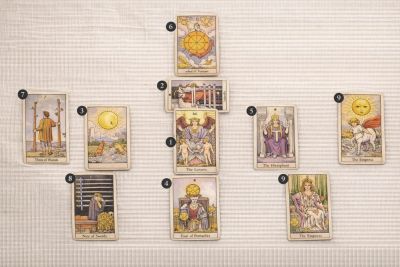
Celtic Cross reading A more detailed traditional spread used for deeper insight into a situation.
Relationship spread Usually looks at one person, the other person, the connection, challenges, and likely direction.
Career spread Covers current work energy, obstacles, opportunities, and next steps.
Yes or no reading A simple reading for quick clarity, though tarot usually works best with more open questions.
Tarot Myths and Misconceptions
Tarot is often misunderstood. It is not something to be feared, and it is not only about predicting the future. For many people, tarot is a supportive and empowering tool for reflection, guidance and personal growth. It helps bring awareness to the present moment and the choices available to you.
The Modern Mystic - Tarot card reading services
Reading cards is not for you, how to get a tarot reading
Discover our intuitive tarot readings designed to bring clarity, reassurance and insight. Whether you are seeking guidance in love, career, personal growth or a specific situation, each reading is created to help you feel more connected to your path.
The main types of tarot readings are:
- general
- love and relationships
- career and finance
- spiritual guidance
- decision-making
- predictive
- reflective
- shadow work
- year-ahead readings
And these can be done using different spreads like one-card, three-card, or Celtic Cross.
Love Tarot
Love tarot readings explore relationships, romance, emotional connection and the energy between people. Whether you are single, in a relationship or seeking clarity about a specific person, love tarot can offer insight into feelings, patterns, compatibility and possible next steps.
Career Tarot
Career tarot readings focus on work, ambition, purpose and professional direction. They can help you understand challenges, opportunities, workplace dynamics and the energy surrounding important decisions. Career tarot is ideal for gaining clarity in times of change, uncertainty or growth.

Or do-it-your-self by starting with a beginner-friendly pack including a starter deck, books and journals to learn the basic meanings to explore questions about life, relationships, emotions, and direction.
We are here to support you!
The Modern Mystic - Tarot card products & guidnance
Want to start reading tarot cards?
For a beginner, the best place to start is very simple: choose a deck, learn the basic meanings, and build a daily habit. One common beginner method is to draw one card a day and reflect on what it might mean for that day. Another beginner-friendly approach is to use simple three-card spreads, because they are easier to interpret than complex layouts.
Beginner Tarot Guidance
Beginning tarot is about building confidence, trust and connection with the cards. You do not need to know everything at once. Start with simple card meanings, one-card pulls and gentle practice, allowing your understanding to grow over time. Tarot is a journey of intuition as much as knowledge.
How to Choose a Tarot Deck
Choosing a tarot deck is a personal experience. The best deck is one that feels visually appealing, comfortable and easy to connect with. Many beginners are drawn to decks with clear imagery and guidebooks, while others prefer something more artistic or intuitive. The right deck is the one that feels aligned with you.
What you need to start and develop
What you need is fairly minimal. At the start, most people benefit from:
- a tarot deck you like and feel comfortable using
- a guidebook or beginner resource to learn the card meanings
- a notebook or journal to record pulls, questions, and reflections
- a quiet space where you can focus without rushing
Choosing a deck that feels approachable matters, and beginner guidance often recommends keeping things straightforward rather than trying to memorize everything at once.
How to get started
A good beginner routine looks like this: ask a clear question, shuffle the cards, pull one to three cards, notice the imagery and symbols, then write down what stands out. A few easy starting spreads are:
- Card of the day
- Past / Present / Future
- Situation / Action / Outcome
- Blessing / Challenge / Advice
These simpler spreads help you learn faster and avoid overwhelm.
How to develop over time
In terms of support and guidance, we all need reassurance that we do not have to master all 78 cards immediately. It is enough to start with the basics, learn gradually, and let personal interpretation grow over time. Helpful support can come from a guidebook, a class, a trusted teacher, or a consistent self-practice where you reflect on the cards regularly. We offer support and guidance services.
Already a seasoned Tarot Card Reader?
We offer a range of personalised Cards, Journals and storage and cleansing kits.
Some of our Store products
- Tarot readings
- Email tarot readings
- Recorded video tarot readings
- Tarot guidebooks
- Tarot journals
- Tarot spread planners
- Tarot cloths
- Tarot deck bags or boxes
- Tarot-themed candles
- Tarot card art prints
- Beginner tarot bundles
- Tarot readings
- Email tarot readings
- Recorded video tarot readings
- Tarot guidebooks
- Tarot journals
- Tarot spread planners
- Tarot cloths
- Tarot deck bags or boxes
- Tarot-themed candles
- Tarot card art prints
- Beginner tarot bundles
- Gift Cards